

Health & Safety
How we plan safe builds in the GCC: load calculations, certified riggers, power protection, inductions and documented inspections.
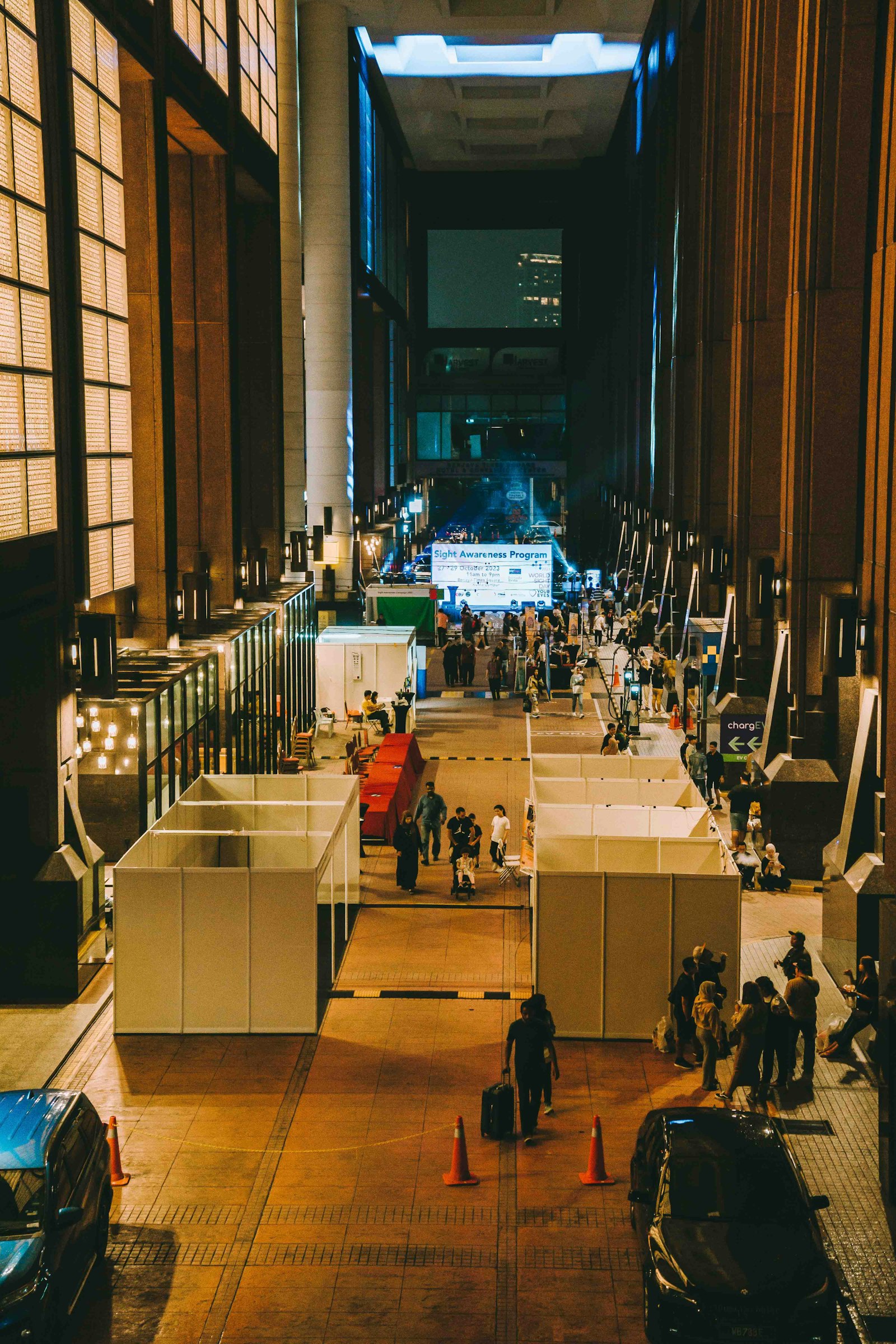
Every build starts with a risk assessment and a method statement written for that venue, not copied from the last one. They are submitted to the venue and the relevant authority before the trucks arrive, and the crew works to them on site.
Rigging and structures
- Load calculations and rigging plots signed off before any lift
- IRATA-certified riggers and certified hoists with inspection records
- Two people on every lift, and nobody under a suspended load
- Daily pre-show inspection of flown elements, documented and filed
Power and electricity
- Distribution designed and installed by licensed electricians
- Earth leakage protection on every temporary circuit
- Separated power for audio and video where the supply allows
- Load monitoring on large builds, with a documented shutdown sequence
Site discipline
Everyone — staff, freelancers and subcontractors — completes a site induction before starting work. High-visibility clothing, footwear and hard hats are required during build, and a daily briefing covers the day's lifts, vehicle movements and hot-work permits.
Weather, heat and crowds
Outdoor work in the Gulf is planned around heat: shaded rest areas, chilled water, rotated shifts and no lone working. Structures are wind-rated with a monitored shutdown plan, and effects such as haze, flame and pyrotechnics run under permits with a closed rehearsal.
Reporting
Near misses are recorded even when nothing and nobody was hurt, because they are the cheapest warning available. Incident reports go to the client and the venue within the same shift, and the findings feed the next build.